
Insights from Over a Decade in Interior Design
After more than ten years working as an interior designer, one thing has become very clear to me: good design should work with the environment, not against it. This is exactly why Tropical Modern Architecture continues to grow in popularity—especially in regions with warm weather, high humidity, and plenty of sunshine.
Tropical modern design is not just about aesthetics. It’s about comfort, lifestyle, and smart decisions that make spaces feel light, cool, and connected to nature. In this article, I want to share how I understand tropical modern architecture, how it works in real projects, and a few practical tips based on hands-on experience.
What Is Tropical Modern Architecture?
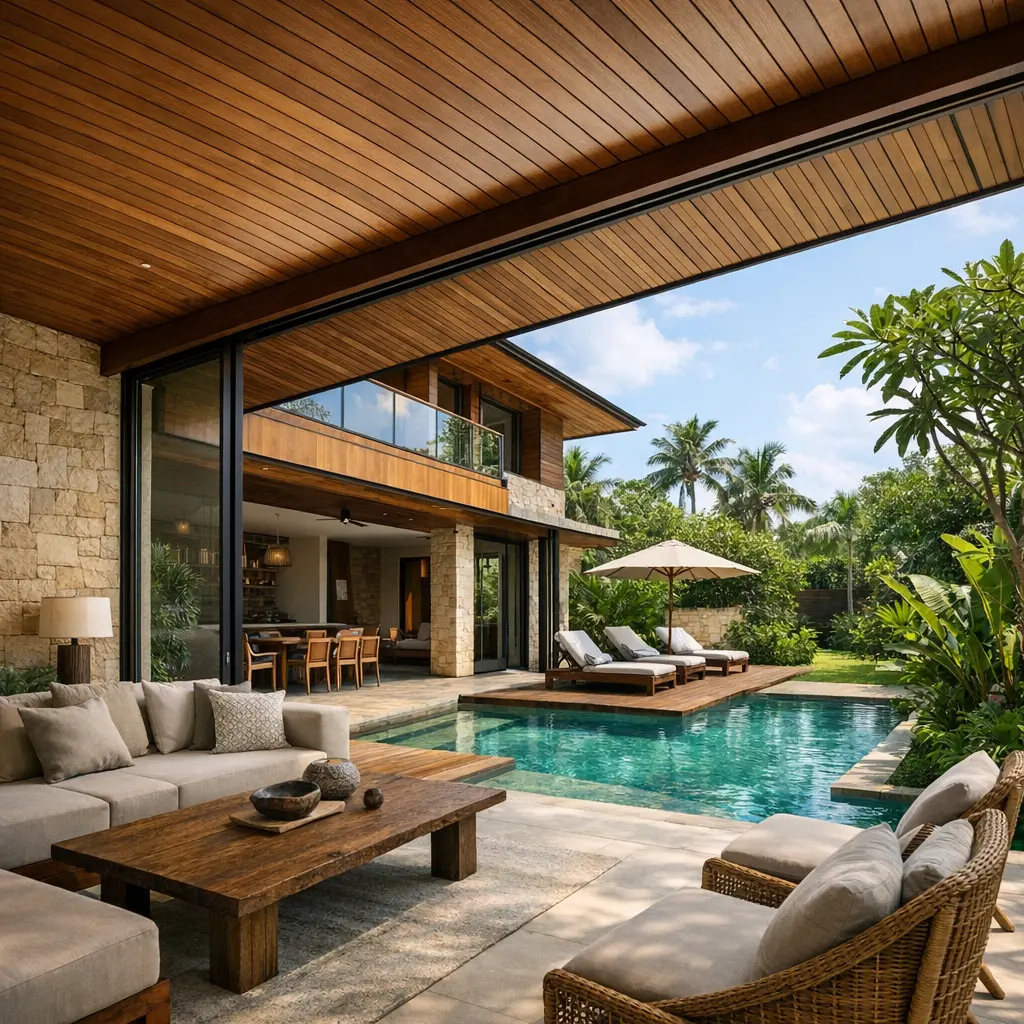
In simple terms, Tropical Modern Architecture combines clean, modern design with strategies that respond to tropical climates. Think modern lines, open spaces, and minimal details—balanced with natural airflow, shading, and greenery.
Unlike designs that rely heavily on air conditioning and artificial lighting, tropical modern spaces are designed to breathe. They feel relaxed, natural, and effortless—yet still elegant and contemporary.
Core Principles of Tropical Modern Design
1. Designing for the Climate
In tropical regions, heat and humidity are everyday challenges. A well-designed space should reduce heat naturally, not trap it inside.
From my experience, this means:
- Maximizing cross-ventilation
- Avoiding heat buildup in enclosed spaces
- Letting hot air escape through higher ceilings or roof ventilation
When airflow works well, the space immediately feels more comfortable—even without turning on the AC.
2. Strong Connection Between Indoor and Outdoor Spaces
One of my favorite aspects of tropical modern design is how it blurs the line between inside and outside. Large sliding doors, open terraces, and semi-outdoor areas are not just design features—they are lifestyle elements.
This connection:
- Brings in natural light
- Improves air circulation
- Makes spaces feel bigger and more relaxed
As an interior designer, I always think about how furniture, lighting, and materials support this seamless transition.
3. Simple, Honest Aesthetics
Tropical modern architecture embraces simplicity. The design doesn’t try too hard. Clean lines, neutral colors, and natural textures do most of the work.
Instead of heavy decoration, the focus is on:
- Proportion and balance
- Texture over ornament
- Materials that age beautifully
This approach creates interiors that feel calm, timeless, and easy to live in.
Design Strategies That Actually Work
Passive Cooling and Ventilation
Good ventilation is not accidental—it’s designed. Placing openings on opposite sides of a space allows air to move freely. High ceilings help hot air rise, keeping the lower area cooler.
In interiors, I often support this by:
- Using breathable materials
- Avoiding bulky furniture that blocks airflow
- Choosing layouts that feel open rather than crowded
Smart Shading Solutions
Sunlight is great, but too much direct sun can quickly overheat a space. That’s why shading is essential in tropical modern design.
Common solutions include:
- Deep roof overhangs
- Wooden or metal louvers
- Sheer curtains that filter light without blocking it
From the interior side, soft fabrics and layered window treatments can make a big difference in controlling heat and glare.
Material Choices Matter
Materials play a huge role in both comfort and aesthetics. Over the years, I’ve learned that natural materials almost always perform better in tropical environments.
Some of my go-to choices include:
- Wood and rattan for warmth
- Natural stone for cooling surfaces
- Concrete for durability and a modern touch
Local materials are especially valuable—they are usually better suited to the climate and give the space a stronger sense of identity.
Practical Tips from Real Projects
- Always study the sun direction before finalizing layouts or furniture placement.
- Let the space breathe—don’t overfill it with furniture or decoration.
- Use light colors, but don’t be afraid of texture to avoid a flat look.
- Design for daily life, not just photos. Comfort always wins.
- Think long-term—tropical modern design should age gracefully, not feel trendy for just a few years.
Final Thoughts
Tropical Modern Architecture works so well because it feels natural. It respects the climate, supports a relaxed lifestyle, and creates spaces that are both modern and comfortable. From an interior designer’s point of view, it also offers incredible flexibility—allowing us to play with light, airflow, textures, and nature in meaningful ways.
After more than a decade in this field, I believe the best tropical modern spaces are the ones that don’t scream for attention. They quietly do their job—keeping people comfortable, connected to nature, and happy in their everyday lives.